News
Service
Contact
- Sales Manager:
136 9193 8340 Regional Managers (Southwest, South , East)
133 1685 3282 Regional Manager (Central China)
153 3876 1408 Regional Manager (Northwest)
134 1062 9251 Regional Manager (North China, Northeast)
- OEM:
134 1062 9251 Regional Manager
After the rigorous "531 New Deal" and the subsidy policy continues to be shortened, China's PV shopping malls will gradually develop from incremental shopping malls to buying and selling malls, and occupational concentration will be improved after integration. The above speculation was made by PricewaterhouseCoopers China and TÜV Rheinland Group (hereinafter referred to as TV Rheinland) recently released the "2019 White Paper on the Sale and Purchase of Photovoltaic Power Plants in China" (hereinafter referred to as "White Paper"). The "White Paper" believes that in the future, China's new distributed photovoltaics will become the main force beyond centralized photovoltaic installation. It is estimated that by 2020, the proportion of distributed PV in China's cumulative PV installation will increase from 29% at that time to over 40%.

2018 is a year of transformation and adjustment of China's photovoltaic industry. On June 1, 2018, the National Development and Reform Commission, the Ministry of Finance, and the National Power Bureau jointly issued the "Notice on Matters Related to Photovoltaic Power Generation in 2018" (the industry referred to as "531 New Deal"), and the new funding for the suspension of general-scale photovoltaic power plants. In order to control the scale of distributed photovoltaics and reduce subsidies, the domestic installed capacity of new PV will fall sharply. At the same time, the trend of shortening the PV subsidy policy is continuing. In January 2019, the National Development and Reform Commission and the Power Bureau issued the "Notice on actively promoting the work related to wind power and photovoltaic power generation without subsidy parity online", and started to promote non-subsidized photovoltaic projects nationwide, which will effectively enter speculative developers into photovoltaic installations. .
The "White Paper" speculates that in the short-term, under the big picture of the tightening of the photovoltaic policy and the slowdown of macroeconomic growth, China's photovoltaic shopping malls will show three major trends: the scale of new installed capacity has decreased; the installed capacity of distributed photovoltaics It will surpass the centralized installation scale and become the main force of new dedication; the PV subsidy will gradually withdraw from the shopping mall, and the parity Internet access will be available.
In the past, the situation in which the occupational trading of photovoltaic power plants in China was relatively faint will also change. According to the White Paper, with reference to the Japanese experience, when the PV subsidy price dropped to about 40% of the peak, the mall changed from incremental to trading, and after the 531 New Deal, China's PV benchmark price was lowered by 30% from the highest peak. 40% is now near the critical value.
According to the statistics of the "White Paper", the domestic PV power plant property shopping malls showed explosive growth after the 531 New Deal: before the New Deal, the photovoltaic power station shopping malls mostly focused on new capital-loaded installations, and the purchases and purchases based on stocks were relatively inactive; after the New Deal, In the half year period (as of the end of September 2018), the quantity, amount and capacity of purchases and sales exceeded the sum of the previous three years, and the total number of purchases and sales was 11 transactions, and the trading volume was 1,295 MW (1 MW = 1000 KW). The purchase and sale amount was close to 9 billion yuan. The above-mentioned purchases and sales are mainly based on professional mergers and acquisitions. The sellers are mostly relatively weak PV companies: due to the influence of the New Deal, some of the smaller PV power plants are invested in the operators themselves, and their debts are under pressure. .
"In the future, with the overall slowdown of new PV installed capacity, large and medium-sized enterprises in the industry will rely more on mergers and acquisitions to obtain increased installed capacity, while small businesses in the professional sector will be affected by state subsidy delays and operational risks, cash. The flow pressure is relatively large, and it may be withdrawn through the method of selling property. China's photovoltaic shopping mall will gradually buy and sell from the green space shopping mall to the stock power station, and the professional concentration will be further improved.” PricewaterhouseCoopers China's power occupation and acquisition expert Lu Bing said. From the perspective of domestic shopping malls, the installed capacity of the top ten PV power plants is 30.28%.
The buying and selling characteristics of centralized and distributed PV power plants will be differentiated. PwC believes that China's power, infrastructure and mining and purchasing and sales partner Xiao Xiao believes that the traditional centralized ground power station is facing the merger and integration of the stock power station, and the distributed power station will face a more diversified funder. More challenging funding needs. "We found that in addition to the traditional PV power plant funders, funds, financial institutions, the parks / large and medium-sized manufacturing enterprises that want to gain the power of capital through distributed photovoltaics, and even cross-professional entrants, such as some of the world's top 500 non-powered Enterprises, perhaps through the investment of photovoltaic stores, to achieve the social commitment to use green power." Compared with traditional large-scale ground power plants, distributed photovoltaics are small in scale, can be directly installed on the roof of individuals and businesses, easy to close.
Zou Chizhen, vice president of solar energy services at TV Rheinland Greater China, proposed that there are many risks involved in the purchase and sale of property in photovoltaic power plants. The first three categories can be summarized as skills, finance and business. The skills dangers will be reflected in power plant equipment, project management and system. In terms of functions and operation and maintenance, these risks will affect the safety of the power station system, the overall function of the quality and the amount of power generated. Therefore, the necessary skills due diligence in the PV plant purchase and sale process, identify and analyze the various potential skill hazards from each stage and level of the power plant life cycle, and assess the quality, function and safety of these skills hazards for PV power plants. The impact and impact on the sale of power plants are all critical.
In the White Paper, in addition to an in-depth analysis of how to identify and assess hazards in PV power plant skill due diligence, TV Rhein also carefully interprets critical equipment, failure statistics of test data, and some typical dangerous links at specific stages.
In the long run, PwC and TV Rhein believe that the green power based on solar energy will still be the main direction of power structure adjustment. China is gradually introducing more guidelines to support green power, including sales-side changes, green card mechanism, green power quota system, etc., all of which are expected to promote the recovery and further development of PV shopping malls. The continuous improvement of domestic new power skills and the mechanism of the transmission and distribution network will also become a long-term driving force for career development.

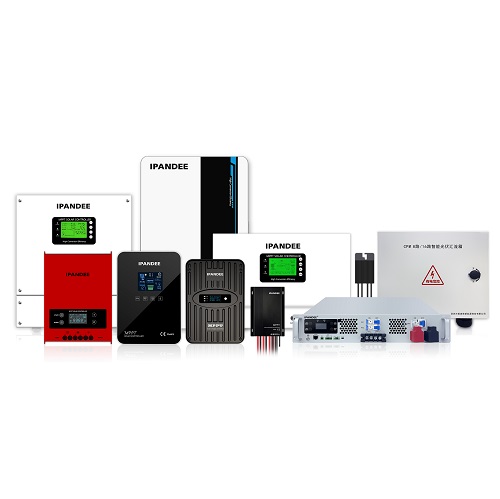
We are a national key high-tech enterprise integrating R&D, production, sales and service, specializing in the production of MPPT controllers, inverters, UPS, solar energy, wind energy and other energy power products. The main products include industrial grade MPPT solar controllers, solar inverters, solar power systems, UPS and other energy products. It is a leading manufacturer of MPPT controllers in China.
Disclaimer: The content is partly from the internet. In order to pass on more information, it does not mean agreeing to its views or confirming its description. Article content is for reference only. If there is any infringement, please contact in time.
Prev:Construction of a 102 MW photovoltaic project in Hyogo Prefecture, Japan
Next:sPower500MW photovoltaic project approved