
News
Service
Contact
- Sales Manager:
136 9193 8340 Regional Managers (Southwest, South , East)
133 1685 3282 Regional Manager (Central China)
153 3876 1408 Regional Manager (Northwest)
134 1062 9251 Regional Manager (North China, Northeast)
- OEM:
134 1062 9251 Regional Manager
Brazil introduces new policy, opening new tender on June 27
Time:2019-04-08 Clicks:
1012
ANEEL, the Brazilian power market regulator, confirmed that Brazil will introduce a change policy involving distributed PV later this year that will respect the tangible benefits of tens of thousands of Brazilian users.
ANEEL Board Advisor Daniel Vieira said at a recent meeting organized by the photovoltaic alliance ABSOLAR: "This new regulation, which was released in the second half of 2019, is only applicable to the latest grid projects in Brazil." He made up for "this move, which helps to adhere to the (determined) legal certainty and (protection) the contract of the pioneer who trusts this skill."
This resolution may bring a breather to nearly 75,000 customers. According to ABSOLAR, by the beginning of February 2019, these customers have access to the distributed generation system, and since the first release of the regulations by ANEEL in 2012, there will be The electricity is injected into the grid from the beginning.
ABSOLAR believes that the number of 75,000 of the 84 million customers serviced by mainstream distributors in Brazil is not even "nine cattle and one hair". "In fact, we are far behind the world." The transaction organization announced in early February that it was a comment.
On the issue of the change of the distributed policy, PV companies and distributors are arguing and unbearable.

It is understood that the original distributed party in Brazil is priced higher for photovoltaic power generation, and the remaining power of distributed power generation except for self-use can be exchanged to a credit line for financial organizations, rather than having to sell to the electricity market, and The power of the self-sufficient power of the distributed power station holders can also enjoy the specified specific tax-free benefits (sideside reflects the “high cost” that other power customers need to bear).
This is why PV companies and distributors cannot afford the new distributed PV policy because the changes will affect the implementation and construction of the distributed.
In the past few months, the electricity regulatory organization ANEEL has been working hard to promote the National People's Congress debate on the transformation of distributed generation. In public hearings and other events, ANEEL emphasized its support for policy change: change is “unstoppable” and “giving customer rights”, and it also justifies the need for change: “Research shows that infinity Maintaining the existing rules will bring high-cost electricity to other users in the grid who do not have photovoltaic devices."
In the course of the debate, PV companies and mainstream distributors have been fighting against. Earlier this year, ABSOLAR criticized the latter for boycotting the “new reality” of distributed generation and “disregarding” its economic, environmental and social benefits.
The big debate on distributed power generation coincides with the great opportunity for the development of the Brazilian photovoltaic ecosystem. Brazil's cumulative PV installations have recently broken the 2GW record – twice the installed capacity a year ago – and are preparing to wait for the upcoming project bidding, starting on June 27th.

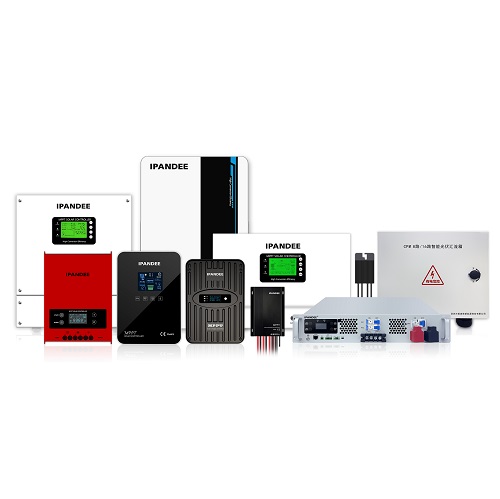
We are a national key high-tech enterprise integrating R&D, production, sales and service, specializing in the production of MPPT controllers, inverters, UPS, solar energy, wind energy and other energy power products. The main products include industrial grade MPPT solar controllers, solar inverters, solar power systems, UPS and other energy products. It is a leading manufacturer of MPPT controllers in China.
Disclaimer: The content is partly from the internet. In order to pass on more information, it does not mean agreeing to its views or confirming its description. Article content is for reference only. If there is any infringement, please contact in time.
ANEEL Board Advisor Daniel Vieira said at a recent meeting organized by the photovoltaic alliance ABSOLAR: "This new regulation, which was released in the second half of 2019, is only applicable to the latest grid projects in Brazil." He made up for "this move, which helps to adhere to the (determined) legal certainty and (protection) the contract of the pioneer who trusts this skill."
This resolution may bring a breather to nearly 75,000 customers. According to ABSOLAR, by the beginning of February 2019, these customers have access to the distributed generation system, and since the first release of the regulations by ANEEL in 2012, there will be The electricity is injected into the grid from the beginning.
ABSOLAR believes that the number of 75,000 of the 84 million customers serviced by mainstream distributors in Brazil is not even "nine cattle and one hair". "In fact, we are far behind the world." The transaction organization announced in early February that it was a comment.
On the issue of the change of the distributed policy, PV companies and distributors are arguing and unbearable.
It is understood that the original distributed party in Brazil is priced higher for photovoltaic power generation, and the remaining power of distributed power generation except for self-use can be exchanged to a credit line for financial organizations, rather than having to sell to the electricity market, and The power of the self-sufficient power of the distributed power station holders can also enjoy the specified specific tax-free benefits (sideside reflects the “high cost” that other power customers need to bear).
This is why PV companies and distributors cannot afford the new distributed PV policy because the changes will affect the implementation and construction of the distributed.
In the past few months, the electricity regulatory organization ANEEL has been working hard to promote the National People's Congress debate on the transformation of distributed generation. In public hearings and other events, ANEEL emphasized its support for policy change: change is “unstoppable” and “giving customer rights”, and it also justifies the need for change: “Research shows that infinity Maintaining the existing rules will bring high-cost electricity to other users in the grid who do not have photovoltaic devices."
In the course of the debate, PV companies and mainstream distributors have been fighting against. Earlier this year, ABSOLAR criticized the latter for boycotting the “new reality” of distributed generation and “disregarding” its economic, environmental and social benefits.
The big debate on distributed power generation coincides with the great opportunity for the development of the Brazilian photovoltaic ecosystem. Brazil's cumulative PV installations have recently broken the 2GW record – twice the installed capacity a year ago – and are preparing to wait for the upcoming project bidding, starting on June 27th.
Disclaimer: The content is partly from the internet. In order to pass on more information, it does not mean agreeing to its views or confirming its description. Article content is for reference only. If there is any infringement, please contact in time.
Prev:This year, it is estimated that the global installed capacity of 129GW
Next:Let the "sunshine" spill into the pockets of the masses